

Responsible Sourcing & Sustainability
At El Yasmina, responsible sourcing is part of the way we manage quality, suppliers, operations and long-term partnerships. Our approach combines structured supplier controls, local agricultural partnerships, environmental monitoring, food-loss management and continuous improvement.
Built into our management system, not added on top
Responsible sourcing and sustainability are managed through our documented food-safety management system — not treated as a separate marketing exercise. The same system that controls product safety also governs how we select suppliers, monitor our environment, handle materials, reduce losses, train our teams and improve year on year.
That system was independently assessed in January 2026 against FSSC 22000 Version 6 by an EGAC-accredited certification body, with zero critical and zero major non-conformities, and re-certification was granted.
Responsible sourcing begins at origin
We work closely with local farmers, approved suppliers and business partners to maintain control over quality, origin and compliance. Suppliers are evaluated through defined approval and monitoring procedures, with additional verification when significant changes or non-conformities occur.
Local agricultural partnerships
Long-term relationships with growers across Egypt’s established growing regions, built to secure quality and continuity of supply.
Supplier qualification
Suppliers of raw materials and packaging are qualified and recorded on a centralised approved-supplier register.
Risk-based evaluation
Supplier performance is evaluated at planned intervals, and again whenever a change or deviation could affect food safety, quality or compliance.
Incoming verification
Raw materials are inspected on arrival and tested against specification, including analysis by an ISO/IEC 17025-accredited laboratory.
Environmental monitoring in our operations
We operate a documented environmental monitoring programme across production, sorting, packing and storage areas. Its purpose is to verify the effectiveness of cleaning, sanitation and pest control and to protect both product integrity and the production environment.
- Hygiene and sanitation verification
- Surface, air and equipment monitoring where applicable
- Temperature, humidity and ventilation controls
- Pest-control monitoring
- Corrective-action procedures when limits are exceeded
This is operational environmental monitoring and hygiene control within our food-safety system. It is not a claim of ISO 14001 certification, carbon neutrality or emissions targets.
Reducing food loss through better control
El Yasmina maintains a documented food loss and waste management programme focused on reducing avoidable losses during sorting, packing and storage, improving inventory rotation, and ensuring the safe handling of surplus materials and by-products.
Stock rotation
A combined FEFO / FIFO system across raw materials and finished products; batches nearer to expiry are prioritised for use.
Batch traceability
Every batch is identified and traceable, supporting accurate inventory control and the safe use of stock.
By-product segregation
By-products and surplus materials are segregated from consumable products, with controls to maintain traceability.
Surplus control
Surplus suitable for other uses is evaluated and handled safely, in line with regulatory and customer requirements.
Training and continuous improvement
Employee competence is supported through structured training, annual refreshers and documented procedures. Our food safety and quality culture programme keeps teams engaged in maintaining and improving standards across every operational area.
- Food safety
- Hygiene and GMP
- Allergen control
- Equipment operation
- Emergency procedures
- Food defense
- Food fraud awareness
- Environmental monitoring, where relevant
Training records, competency requirements and refresher training are maintained as part of the system.
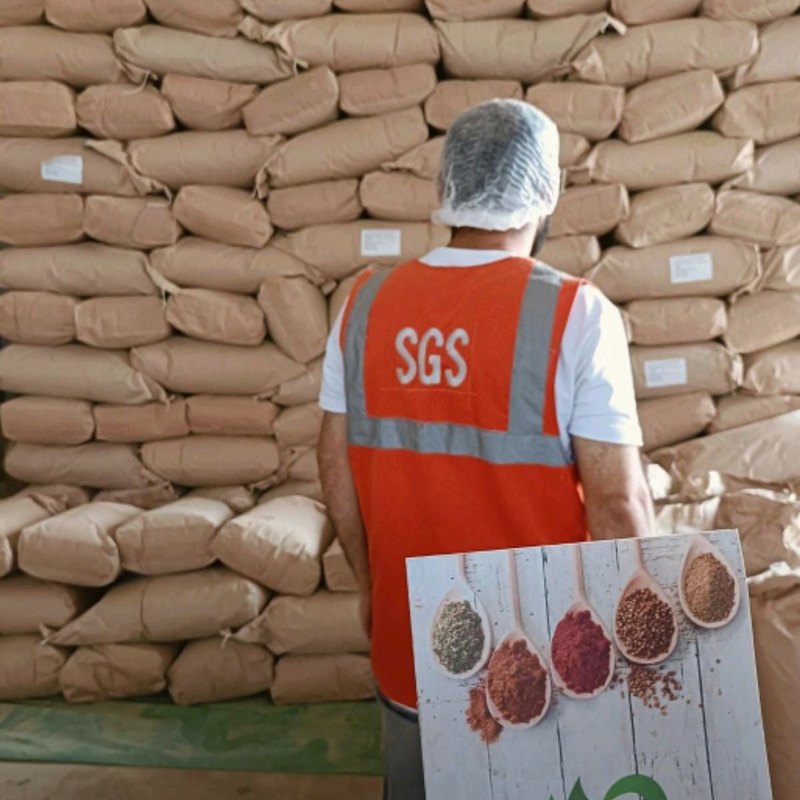
Verified management systems
Responsible sourcing is backed by independently assessed systems, audited by accredited bodies.
- FSSC 22000 Version 6 — food safety system certification (GFSI), valid to 24 January 2029 (reg. EG-FSS-0095)
- ISO 22000:2018 — food safety management system, valid to 21 October 2028 (cert. 347ISO22E/2025)
- HACCP-based food-safety system — hazard analysis and critical control points, Codex CXC 1-1969 principles, integrated throughout the system
- ISO 9001:2015 — quality management system (exporting of agricultural crops & foodstuff)
- U.S. FDA — food facility registration for shipments to the United States (reg. 17091220016)
Current certificates, registration details and their scope are provided on request and are the authoritative record.
Continuous improvement
Our systems are reviewed through internal audits, external certification audits, management reviews, supplier evaluations, corrective actions and customer feedback.
Our objective is practical: maintain safe, compliant agricultural products while continuously improving the way we source, process, pack and deliver them.
Request our compliance documents
Share your requirement and we will provide the relevant certificates, specifications and documentation. We reply within one business day.