
Food safety & quality
From farm to export — a certified food-safety system
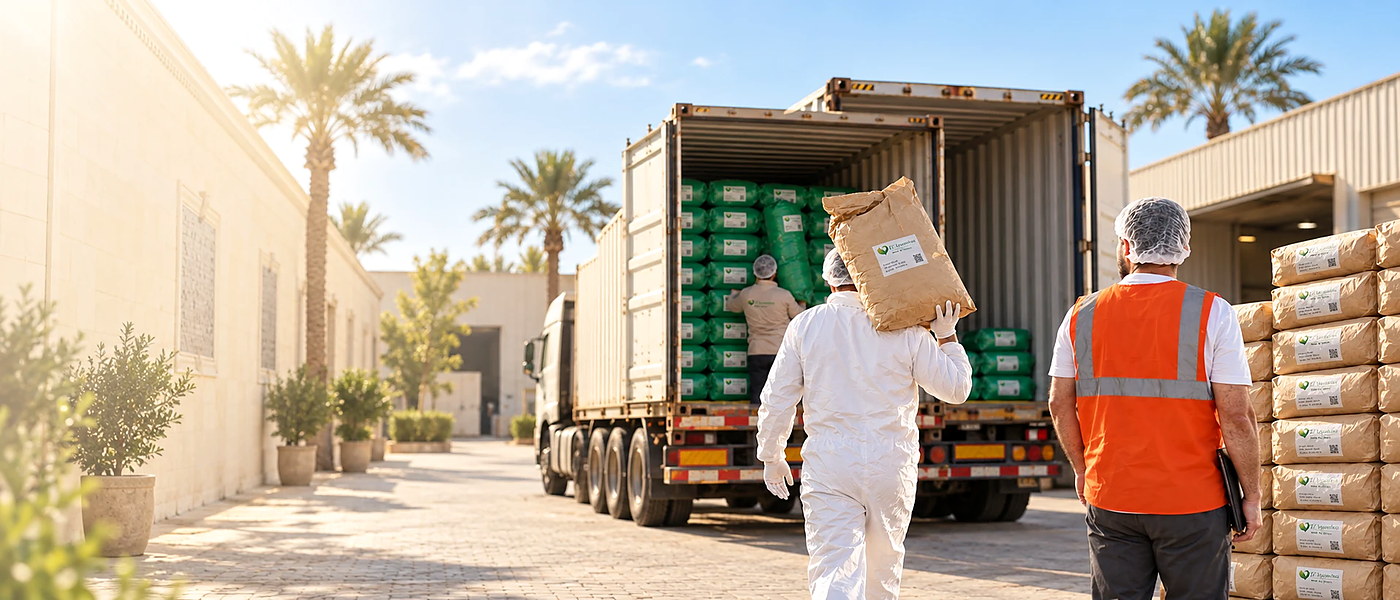
El Yasmina operates a certified food-safety system covering sourcing, cleaning, laboratory testing and export. Consignments are prepared to the agreed specification, with the documentation required by the destination market and lot-level traceability.
Company certifications
Independently certified
Our management and food-safety systems are audited and certified by accredited bodies to internationally recognised standards, and our facility is registered with the U.S. FDA. Copies of the current certificates are provided on request.
ISO 22000:2018
FSSC 22000 v6
HACCP
FDA Registered
The U.S. FDA Food Facility Registration is the registration required to ship food to the United States, renewed biennially — a registration, not an FDA approval of the product.
Quality & food-safety controls · Process
Multi-stage quality control
Identified risks are controlled from grower to loaded container. Our food-safety controls include pesticide-residue verification (CCP 1) and metal detection (CCP 2) at defined control points in the process.
01
Supplier & intake control
Pre-qualified growers; truck cleanliness and bag conformity checked on arrival.
02
Physical inspection
Colour, odour, foreign matter, infestation and mould checked in daylight, in an isolated area.
03
Laboratory analysis
Chemical, microbiological, heavy-metal and allergen screening before a lot is accepted.
CCP 1 — Pesticides04
Approved raw-material store
On plastic pallets, pest-control traps, with monitored humidity and temperature.
05
Cleaning & separation
Sieve vibrator, gravity and cylinder separators and plansifter remove stones, stems and dust — magnets at every stage.
06
Metal detection
Gravity-fall metal detection at a defined control point; detection sensitivities are set and checked against the calibration schedule (typical: Fe 1.0 mm, non-Fe 1.2 mm, stainless 1.5 mm).
CCP 2 — Metal07
Packing & container loading
Food-grade sealing, label and batch check; a clean, sealed container is inspected before loading.
Traceability
Lots linked to production and export documentation
Our traceability system links supplied lots to production and export documentation; continuous temperature and humidity logging in storage; FIFO / FEFO rotation.
Quality & food-safety controls · Laboratory
Tested before dispatch
Lots are analysed for microbiology, heavy metals and pesticide residues as required. Test parameters and acceptance limits are confirmed against the approved product specification and destination-market requirements. Metal detectors are calibrated and storage cleanliness is audited on a scheduled basis.
Chemical
- Moisture (per product specification)
- Pesticide residues (EU MRL)
- Aflatoxin
- Ash content
- Volatile oil
Microbiology
- Total plate count
- Salmonella (absence criterion per specification)
- E. coli
- Coliforms
Heavy metals
- Lead — Pb
- Cadmium — Cd
- Arsenic / Mercury (risk-based)
Allergens
- Gluten screening
- Celery screening
- Documented cross-contact controls
Quality & food-safety controls · Packaging
Food-contact packaging
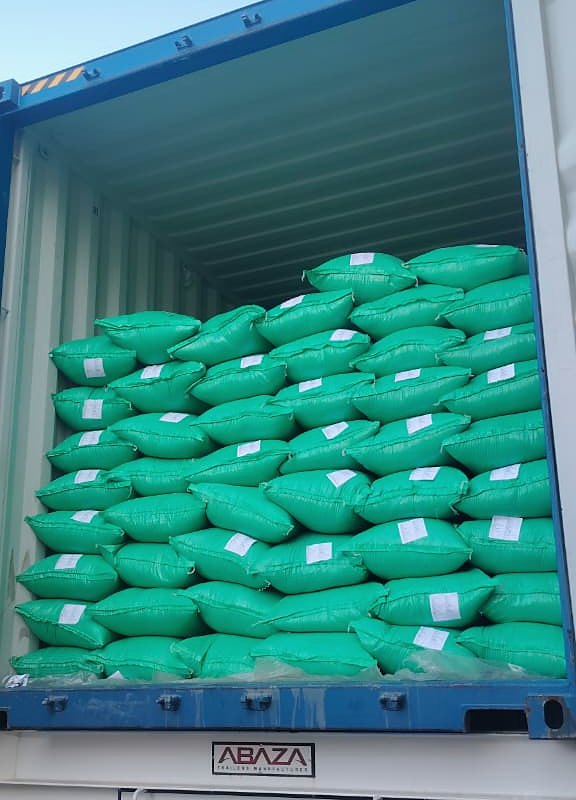
Dry herbs, spices, seeds and flowers are packed in food-grade materials selected for direct food contact and tested against European and Egyptian food-contact standards. Packaging is produced by an ISO 9001 and ISO 22000 certified manufacturer, under good manufacturing practice.
- Food-grade polypropylene — woven sacks with food-grade liners, confirmed by laboratory analysis.
- Migration tested — overall migration about 1 mg/dm² against the EU limit of 10; Bisphenol A below the limit of quantification; PAHs and formaldehyde not detected.
- Standards applied — Regulation (EC) 1935/2004, Regulation (EU) 10/2011, GMP (EC) 2023/2006, and Egyptian standard ES 7040/2020.
- Certified manufacture — produced under ISO 9001 and ISO 22000.
Food-contact test reports and declarations of compliance are available on request. Additional testing — for example MOSH/MOAH or PFAS — can be arranged where a market or customer specification requires it.
Optional export services
Options on request
When your destination market requires it, we apply validated treatment and independent inspection before dispatch.
Steam sterilisation
Steam sterilisation can be arranged according to product and buyer requirements: saturated-steam cycles (typically 121–132 °C) reduce microbial load, including pathogens, while preserving product quality.
PH₃ fumigation (phytosanitary)
Fumigation (PH₃) is available on request where applicable: controlled phosphine treatment for phytosanitary purposes controls insects and eggs without heat or moisture; dosage, exposure and temperature are monitored and treated lots are ventilated before packing.
Stored raw-material fumigation
Controlled phosphine (aluminium phosphide, PH₃) fumigation of stored raw material by a licensed applicator controls insects and their eggs; a fumigation certificate is issued for treated lots.
SGS inspection (on request)
Independent third-party laboratory testing and pre-shipment inspection to verify quality against international buyers’ standards.
Fumigation (PH₃) on request — applied when the destination market or the buyer requires it; products are not fumigated by default.
Controls · Documented systems
Procedures behind each shipment
- HACCP plan
- Allergen management
- Traceability
- Recall & withdrawal
- Food-contact packaging
- Pest control
- FIFO / FEFO rotation
Controls · Product integrity
Protected from line to port
- Shelf life — stated per product on the specification sheet
- Food-grade PP or jute bags and cartons, commonly 25 kg, or to client specification
- Sealed, dry, cool, ventilated storage
- Labelling: type, weight, expiry, origin, batch, cert body
- Continuous temperature & humidity logging
- Lots traceable to farm and batch through the traceability procedure
Export services · Documentation
Complete export documentation
- Certificate of Analysis (CoA)
- Phytosanitary certificate
- Certificate of origin
- Health certificate
- Fumigation certificate
- Pesticide-residue report
- Microbiological report
- Heavy-metals report
- Allergen statement
Issued per shipment and tailored to the destination market — available on request before dispatch.
Quality documents
Need certificates or test reports?
Tell us the product and destination market and we will send the relevant documentation.
Request quality documents